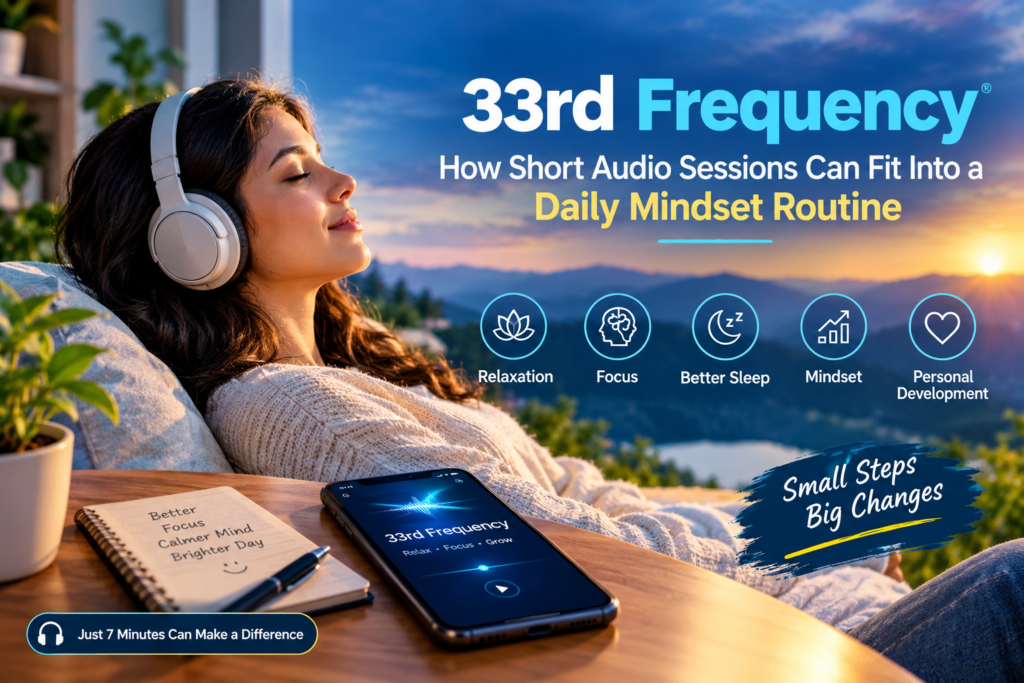
Modern life is full of notifications, messages, work tasks, social media, and endless information. Even when the day is not especially busy, it can be difficult to give the mind a quiet moment.
This is one reason short audio sessions have become an interesting part of many people’s daily routines.
Unlike long meditation sessions or complicated wellness programs, short audio experiences can be easy to fit into an existing schedule. A person can listen while sitting quietly in the morning, taking a break during the afternoon, or preparing for sleep at night.
One example that has attracted attention in the personal development and relaxation space is 33rd Frequency. It is designed around short audio experiences that combine layered sounds, ambient elements, and optional guided sessions.
But the bigger idea is not simply about one audio program. It is about how short, intentional listening sessions can become a practical part of a daily routine.
Why Short Audio Sessions Are Becoming Popular
Many people want to improve their daily habits but struggle with consistency.
A common problem is that a new routine feels like another task on an already crowded schedule. If an activity requires 30 or 60 minutes every day, it can be difficult to maintain.
Short audio sessions offer a different approach.
Instead of setting aside a large amount of time, someone can create a small listening habit. Even a few minutes can provide an opportunity to step away from screens, reduce distractions, and focus on one activity.
The important factor is not necessarily the length of the session. Consistency and personal comfort can matter more when creating a routine.
For example, someone could listen:
- After waking up
- During a quiet afternoon break
- Before journaling
- During a relaxation period
- Before going to bed
- While sitting in a comfortable and quiet room
The goal is to create a repeatable moment rather than make the routine complicated.
What Makes Audio Useful for a Routine?
Audio has one major advantage: it does not require constant visual attention.
A video usually requires looking at a screen. Reading requires concentration on written words. Audio can be experienced while the eyes remain closed or while a person simply sits comfortably.
That makes audio particularly interesting for relaxation and mindfulness routines.
A person can put on headphones, choose a quiet place, and spend several minutes listening without opening another application or scrolling through social media.
This can create a simple boundary between everyday activity and personal quiet time.
Of course, listening to an audio program does not automatically produce a particular result for everyone. People’s experiences can vary considerably.
The useful part may simply be creating a regular pause in the day.
Exploring Layered and Ambient Sound
Some modern audio programs use more than a traditional spoken recording.
Layered audio can combine multiple sound elements into one listening experience. Ambient sounds, music-like textures, voice guidance, and other acoustic elements can be arranged to create a particular atmosphere.
This approach is common in relaxation, meditation, sleep, and focus-related audio.
The listener does not necessarily have to analyze each sound. Instead, the overall audio environment can provide something consistent to focus on.
This can be helpful for people who find complete silence distracting or who have difficulty sitting quietly without something occupying their attention.
The experience is subjective, however. A sound that feels calming to one person may not have the same effect on another.
The 33rd Frequency and the Idea of Intentional Listening
The 33rd Frequency is presented as a short audio experience built around layered acoustic and ambient soundscapes.
The program is associated with creator Kent Blumen and is designed around short listening sessions. The concept also includes themes connected with relaxation, focus, mindset, personal development, and personal reflection.
One of its interesting features is the emphasis on a relatively short listening period.
A short session can make the idea easier to fit into an ordinary day. Instead of treating personal development as a major project, a listener can simply create a small daily habit.
For people interested in learning more, the official 33rd Frequency website provides additional information about the program and its listening approach.
Why a Seven-Minute Routine Can Be Easier to Maintain
Long routines can sound impressive, but they are not always easy to maintain.
Imagine someone decides to meditate for an hour every morning. The first few days may go well, but work, travel, family responsibilities, or a change in schedule can quickly interrupt the routine.
A shorter session can feel less demanding.
A seven-minute listening session, for example, can be easier to fit between other activities.
The purpose is not to suggest that seven minutes is a magic number. It simply illustrates how a short commitment can reduce the mental barrier to starting.
Once a routine becomes familiar, a person can decide whether to continue listening, journal afterward, or simply move on with the day.
Using Audio With Journaling
One simple way to make an audio routine more intentional is to combine it with journaling.
After listening, a person can spend two or three minutes writing down thoughts or observations.
The questions do not need to be complicated.
For example:
What am I focusing on today?
What is currently distracting me?
What is one thing I want to accomplish?
What kind of mindset do I want to carry through the day?
These questions can turn passive listening into a small reflection exercise.
Again, there is no requirement to produce a specific result. The purpose is simply to give the listener a moment to think without immediately moving to another notification or online activity.
Creating a Simple Evening Routine
Audio can also be used at the end of the day.
Many people spend their final minutes before sleeping looking at phones, checking social media, answering messages, or watching videos.
Replacing some of that screen time with quiet audio may create a more peaceful transition into the evening.
A simple routine could look like this:
- Put the phone on silent.
- Find a comfortable place.
- Put on headphones or earbuds if preferred.
- Start a short audio session.
- Avoid multitasking.
- Spend a few minutes reflecting afterward.
- Prepare for sleep.
This does not guarantee better sleep, and audio should not be treated as a medical treatment for sleep problems. It is simply one possible way to create a calmer bedtime habit.
Audio, Focus, and Digital Distractions
Technology has made information easier to access than ever.
At the same time, constant access can make it harder to concentrate.
A short audio session can provide an intentional alternative to endlessly switching between apps.
Instead of opening social media during a break, someone could choose a short audio track and remain offline for several minutes.
This small change can help establish a clearer distinction between entertainment, work, and personal reflection.
For people who spend most of the day in front of a computer, even a few minutes away from a screen can feel like a useful change of pace.
What About the Symbolism Behind the Number 33?
The concept of The 33rd Frequency also includes symbolism connected with the number 33 and references to the 33rd degree of Scottish Rite Freemasonry.
This background is part of the story and presentation surrounding the program.
However, symbolism should not automatically be confused with scientific evidence.
A number, historical reference, or symbolic association does not prove that an audio program has a particular psychological or physical effect.
That distinction is important when evaluating products in the personal development and wellness space.
It is reasonable to explore the story behind a product while also keeping expectations realistic.
How to Make an Audio Habit More Consistent
The easiest routine is usually one that fits naturally into an existing habit.
For example, instead of choosing a completely new time, someone could connect listening with something they already do.
You could listen after making morning coffee, after finishing work, or before getting ready for bed.
This creates a simple association:
Existing habit → short listening session → next activity
Keeping the environment consistent may also help. The same chair, headphones, room, or time of day can make the routine feel familiar.
There is no need to make the process complicated.
Final Thoughts
Short audio experiences are an interesting example of how technology can be incorporated into everyday personal routines.
They do not require complicated equipment, long sessions, or major lifestyle changes. A person can simply choose a few minutes, put away distractions, and listen.
Programs such as The 33rd Frequency take this idea further by combining layered acoustic elements, ambient soundscapes, and optional guided sessions around themes such as relaxation, focus, mindset, and personal development.
Whether someone finds a particular audio experience useful will depend on individual preferences and expectations.
The most practical approach is to treat it as a personal routine rather than a guaranteed solution.
Start with a short session, pay attention to how it feels, and decide whether it fits naturally into your day.
Sometimes a useful habit does not need to be complicated. A few quiet minutes, repeated consistently, can simply become a small space in the day to pause, listen, and reset.